


Enterprise AI is changing the way organizations operate, compete, and innovate. As businesses adopt advanced AI systems, they must also manage risks related to security, compliance, and accountability. An effective Enterprise AI governance approach helps organizations scale AI responsibly while maintaining trust and transparency.
A strong AI governance framework provides clear policies, oversight, and controls that support long-term success. At the same time, a well-defined AI transformation strategy ensures AI initiatives align with business goals and deliver measurable value. From improving operational efficiency to strengthening AI risk management and supporting AI lifecycle management, governance has become a critical foundation for organizations seeking sustainable and secure AI-driven growth in 2026 and beyond.
What Is Enterprise AI Transformation and Why Does It Matter in 2026?
Defining Enterprise AI Transformation
Enterprise AI transformation refers to the process of integrating artificial intelligence into business operations, decision-making processes, and customer experiences. Unlike isolated AI projects, transformation affects the entire organization. It combines technology, people, data, and governance into one strategic initiative. A strong AI transformation strategy helps companies improve productivity while ensuring Responsible AI governance remains a priority.
Many organizations now use AI to automate repetitive tasks, generate business insights, and support customer interactions. However, transformation goes beyond deploying models. It requires clear ownership, accountability, and risk controls. Without a structured AI governance roadmap, businesses often struggle with compliance issues, fragmented systems, and inconsistent outcomes.
How AI Is Reshaping Modern Business Operations
Across industries, AI is changing how work gets done. Sales teams use predictive analytics to identify opportunities. Healthcare providers rely on AI-powered diagnostics. Manufacturers optimize production through intelligent automation. This widespread Enterprise AI adoption is driving faster decision-making and greater operational efficiency.
The rise of AI-powered decision making, Business process automation, and Digital transformation AI has increased the demand for stronger governance. Organizations must understand how AI systems operate, what data they consume, and how decisions are generated. This is where AI transparency, AI accountability, and Explainable AI (XAI) become critical elements of long-term success.
The Growing Need for Enterprise AI Governance
As AI systems become more sophisticated, risks increase. Models can drift over time. Sensitive data may enter unauthorized systems. Biases can affect outcomes. A well-designed AI governance framework addresses these challenges by establishing clear rules, responsibilities, and monitoring procedures.
Organizations increasingly recognize that AI governance best practices help accelerate innovation rather than slow it down. When teams understand governance requirements from the beginning, they can move faster with confidence. Effective governance creates trust among employees, customers, regulators, and stakeholders.
Key Benefits of Enterprise-Wide AI Adoption
Businesses that implement AI strategically often achieve measurable improvements in productivity, customer satisfaction, and operational performance. Through AI workflow automation, organizations reduce manual work and improve accuracy. Enhanced analytics provide deeper insights that support better business decisions.
Beyond efficiency gains, AI also creates opportunities for innovation. Companies can develop personalized customer experiences, optimize supply chains, and identify emerging market trends. However, these benefits only materialize when supported by effective AI deployment governance and strong AI data governance practices.
Why 2026 Is a Turning Point for AI Governance
The year 2026 marks a significant shift in the AI landscape. Regulatory frameworks are becoming more mature. Organizations face increasing pressure to demonstrate accountability, fairness, and transparency. As a result, AI governance trends 2026 are focused heavily on compliance, oversight, and operational resilience.
At the same time, businesses are deploying more advanced AI systems. Enterprise generative AI tools are rapidly expanding across industries. Organizations exploring image-generation technologies can review our detailed Gramhir Pro AI Image Generator Guide before implementing governance controls for generative AI systems. Organizations that establish governance foundations today will be better positioned for future growth.
Latest AI Governance Updates Every Enterprise Leader Should Know

New U.S. and Global AI Regulations
Governments worldwide are developing rules that shape how organizations deploy artificial intelligence. New regulations emphasize accountability, transparency, fairness, and security. Businesses operating internationally must prepare for increasingly complex compliance requirements.
Modern governance strategies must align with emerging AI governance regulations and evolving AI regulatory compliance standards. Organizations that proactively adapt to regulatory changes reduce legal exposure while building greater trust among customers and investors.
EU AI Act and Its Impact on Enterprises
The European Union has introduced one of the most comprehensive AI regulations ever created. The EU AI Act classifies AI systems according to risk levels and imposes obligations on organizations using high-risk applications.
For many businesses, EU AI Act compliance requires stronger documentation, testing procedures, and governance controls. Companies must demonstrate responsible use of AI while maintaining detailed records that support audits and regulatory reviews.
NIST AI Risk Management Framework Updates
In the United States, the NIST AI RMF continues to serve as a foundational guide for organizations seeking responsible AI practices. The framework encourages businesses to identify risks, assess impacts, and implement mitigation strategies throughout the AI lifecycle.
Many enterprises use the NIST framework to strengthen AI risk governance, improve oversight, and establish repeatable governance processes. It also supports broader efforts to enhance AI trust and safety across complex environments.
Agentic AI Governance Requirements
Agentic AI systems introduce a new layer of complexity. Unlike traditional models, these systems can plan actions, interact with multiple tools, and execute workflows with minimal human intervention. This autonomy creates unique governance challenges.
Organizations deploying agentic systems increasingly rely on Agentic AI governance platform capabilities, advanced Human oversight controls, and stronger AI accountability framework practices. These controls help ensure autonomous systems remain aligned with business objectives and ethical standards.
Emerging Compliance Challenges for Business Leaders
Compliance challenges continue to evolve alongside AI technology. Leaders must manage data privacy concerns, bias risks, cybersecurity threats, and regulatory obligations simultaneously. Traditional compliance programs often lack the flexibility required for AI environments.
As a result, companies are investing in AI compliance monitoring, AI compliance management, and Continuous compliance monitoring solutions. These capabilities provide real-time visibility into governance activities while reducing operational risk.
| Governance Trend | Business Impact |
| EU AI Act Compliance | Increased documentation and oversight |
| NIST AI RMF Adoption | Better risk management practices |
| Agentic AI Governance | Stronger controls for autonomous systems |
| AI Compliance Automation | Faster audit preparation |
| AI Transparency Reporting | Greater stakeholder trust |
Understanding Enterprise AI Governance Tools and Platforms
What Is an Enterprise AI Governance Tool?
An enterprise AI governance tool helps organizations manage the risks, compliance requirements, and operational processes associated with artificial intelligence. These solutions provide visibility into AI assets, model performance, and governance activities.
Modern AI governance software often combines policy management, risk assessment, monitoring, and reporting capabilities into a single environment. This centralized approach improves governance consistency across the organization.
How AI Governance Platforms Work
An AI governance platform acts as a control center for AI initiatives. It tracks models throughout their lifecycle, monitors performance, documents approvals, and supports compliance activities. Many platforms integrate directly with data warehouses, development environments, and cloud services.
Advanced solutions also include AI inventory management, AI audit logs, Data lineage tracking, and Approval workflow automation features. These capabilities provide complete visibility into how AI systems are developed, deployed, and maintained.
Essential Components of Modern Governance Software
Modern governance platforms include a wide range of capabilities designed to support responsible AI operations. Organizations increasingly depend on AI model registry, AI observability platform, AI governance dashboard, and AI monitoring platform solutions to maintain oversight.
These tools support AI model monitoring, Model drift monitoring, AI performance monitoring, and governance reporting. Together, they help organizations identify issues before they become major business risks.
Key Capabilities Enterprises Should Look For
The most effective governance solutions provide automation, transparency, and scalability. Features such as Policy-as-code, Governance automation, Risk-based governance, and Role-based access control (RBAC) reduce manual effort while improving consistency.
Organizations should also prioritize Explainability tools, Bias testing automation, AI risk scoring, and Access control management capabilities. These features help maintain compliance while supporting innovation.
Common Mistakes When Choosing Governance Solutions
Many businesses select tools based solely on compliance requirements. While compliance matters, governance should also support business objectives. Organizations often overlook scalability, integration capabilities, and user experience.
Before selecting a platform, companies should evaluate long-term requirements. Solutions that support AI governance for enterprises, AI governance for large enterprises, and AI governance for analytics teams are typically better positioned for future growth.
The 7 Core Pillars of a Modern Enterprise AI Governance Framework
Strategic Leadership and AI Accountability
Strong governance begins with leadership. Every AI initiative requires clear ownership and defined responsibilities. Organizations often establish an AI governance committee to oversee governance policies, risk management activities, and strategic priorities.
Effective governance depends on clear AI accountability structures. Leaders must understand who owns each model, who approves deployments, and who responds when issues arise. Without accountability, governance quickly becomes ineffective.
Data Governance and Data Quality Management
Data serves as the foundation of every AI system. Poor-quality data often leads to inaccurate outputs and increased business risk. Strong AI data governance practices ensure data remains accurate, secure, and compliant throughout its lifecycle.
Organizations must also implement data lineage tracking, access controls, and quality assurance processes. These controls improve trust in AI outputs while supporting broader governance objectives.
AI Risk Assessment and Compliance Controls
Every AI initiative carries some level of risk. Organizations must evaluate risks before deployment and continuously monitor systems after launch. Comprehensive AI risk assessment procedures help identify vulnerabilities early.
Advanced governance programs use AI risk management software, AI compliance tools, and automated monitoring systems to manage evolving threats. These tools support faster decision-making while maintaining regulatory compliance.
Security, Privacy, and Access Management
AI systems often process large volumes of sensitive information. This creates significant security and privacy concerns. Strong AI security governance practices help protect data, models, and infrastructure from threats.
Organizations increasingly deploy AI security platform technologies alongside advanced AI security controls and AI security monitoring solutions. These measures strengthen overall Enterprise AI security while reducing exposure to cyber risks.
Ethical AI and Responsible AI Practices
Ethical considerations are becoming central to governance discussions. Businesses must ensure AI systems operate fairly, transparently, and responsibly. An effective AI ethics framework helps organizations address bias, discrimination, and unintended consequences.
By implementing Responsible AI practices, organizations build trust with stakeholders while supporting sustainable innovation. Ethical governance also helps reduce reputational and regulatory risks.
AI Lifecycle Management and Monitoring
Governance does not end after deployment. AI systems require continuous oversight throughout their operational lifespan. Strong AI lifecycle management processes include development, testing, deployment, monitoring, and retirement activities.
Organizations often rely on AI monitoring tools, AI observability tools, and AI model monitoring systems to maintain visibility. Continuous monitoring helps identify performance issues before they affect business outcomes.
Employee Training and AI Governance Culture
Technology alone cannot ensure successful governance. Employees must understand governance requirements and their role in maintaining compliance. Training programs help create a culture of accountability and responsible AI use.
Organizations that invest in governance education often experience stronger adoption rates and fewer compliance incidents. A governance-first mindset supports long-term success across all AI initiatives.
Key Features Every Enterprise AI Transformation and Governance Framework Should Include
AI Model Monitoring and Drift Detection
AI models evolve over time as data patterns change. Without proper oversight, model performance can deteriorate significantly. Effective Model drift detection capabilities help organizations identify issues early and maintain reliable outcomes.
Modern governance programs combine AI model monitoring, AI monitoring tools, and advanced analytics to support ongoing performance evaluation. This proactive approach reduces risk and improves operational stability.
Automated Compliance and Audit Trails
Manual compliance processes are difficult to scale. Automated governance solutions simplify compliance activities while reducing administrative overhead. Features such as Automated compliance checks, AI audit trail, and AI audit software improve operational efficiency.
Comprehensive documentation also supports audits and regulatory reviews. Organizations can demonstrate compliance more easily while reducing preparation time and costs.
Explainability and Transparency Tools
Stakeholders increasingly expect visibility into how AI systems make decisions. Explainable AI (XAI) technologies help organizations understand model behavior and explain outcomes clearly.
Strong governance frameworks leverage AI transparency, AI transparency reporting, and advanced explainability capabilities to build trust. These features also support regulatory compliance and ethical AI initiatives.
Bias Detection and Fairness Monitoring
Bias remains one of the most significant challenges in AI deployment. Organizations must actively monitor models for unfair outcomes and discriminatory behavior. Advanced AI bias detection systems help identify potential issues before they impact users.
Fairness monitoring, bias testing automation, and governance reviews work together to support responsible AI outcomes. These capabilities strengthen governance while protecting brand reputation.
Role-Based Access Controls and Security Layers
Not every employee should access every AI system. Effective governance relies on granular access controls that limit exposure to sensitive data and models. Role-based access control (RBAC) provides a scalable approach to access management.
Combined with Access control management and security monitoring capabilities, these controls create a strong governance foundation that supports both innovation and compliance.
Best AI Tools for Enterprise Governance and Risk Management
Top AI Governance Platforms in 2026
As AI adoption accelerates, organizations need specialized tools to manage compliance, risk, and operational oversight. The market for AI governance software has expanded rapidly. Businesses now have access to advanced AI governance solutions that simplify monitoring, documentation, and compliance management across complex AI environments.
Leading providers focus on different governance areas. Some specialize in model monitoring while others focus on compliance automation, security, or explainability. The most successful organizations often combine multiple Enterprise AI platforms to create a comprehensive governance ecosystem that supports growth and regulatory readiness.
Best Tools for AI Compliance Monitoring
Modern compliance requires continuous oversight rather than periodic reviews. Organizations increasingly deploy AI compliance tools that automate evidence collection, audit preparation, and policy enforcement. These systems help reduce manual work while improving consistency across departments.
Advanced compliance platforms support AI compliance automation, policy tracking, and risk reporting. They provide executives with real-time insights into governance performance while ensuring alignment with internal policies and external regulations.
Leading AI Security and Risk Management Solutions
Security remains a major concern for enterprises deploying AI at scale. Organizations must protect data, models, infrastructure, and user interactions. This has increased demand for AI risk management software, AI security platform, and AI observability platform technologies.
Many security-focused governance tools now include anomaly detection, threat monitoring, and automated incident response. These capabilities strengthen AI security governance and help businesses identify vulnerabilities before they become significant threats.
Best AI Audit and Documentation Platforms
Documentation is often overlooked until an audit arrives. Effective governance requires clear records that explain how models were developed, tested, approved, and deployed. This is where AI documentation tools, AI audit software, and Model documentation systems provide value.
Organizations that maintain strong documentation processes can demonstrate compliance more efficiently. Detailed records also improve transparency and simplify governance reviews across business units.
Comparison Table of Enterprise AI Governance Tools
| Tool Category | Primary Function | Best For |
| AI governance platform | Governance oversight | Large enterprises |
| AI monitoring platform | Performance tracking | AI operations teams |
| AI risk management software | Risk mitigation | Compliance teams |
| AI audit software | Audit preparation | Regulated industries |
| AI observability tools | System visibility | AI engineering teams |
| Generative AI governance tools | GenAI oversight | Enterprise AI programs |
Enterprise AI Governance Platform Pricing: What Should Organizations Expect?
Typical Enterprise Pricing Models
Pricing varies significantly depending on organization size, deployment complexity, and governance requirements. Some vendors charge based on the number of models monitored. Others use subscription-based pricing or custom enterprise agreements.
When evaluating Enterprise AI tools pricing, organizations should consider implementation costs, integration expenses, support services, and future scalability requirements. The cheapest option often becomes more expensive if it lacks essential governance capabilities.
Subscription vs Custom Enterprise Plans
Smaller organizations often choose subscription-based governance solutions. These plans provide predictable costs and faster implementation. Larger enterprises typically require customized agreements that support advanced governance workflows and integration needs.
Custom plans frequently include dedicated support, compliance consulting, and tailored reporting capabilities. While costs are higher, they often deliver stronger long-term value for organizations with complex governance requirements.
Hidden Costs Enterprises Often Overlook
Governance investments extend beyond software licensing. Training, data integration, process redesign, and compliance preparation all contribute to total ownership costs. Organizations frequently underestimate the resources needed to establish effective governance programs.
Hidden expenses may also include additional security controls, external audits, governance consulting, and ongoing monitoring requirements. Understanding these costs early improves budgeting accuracy and prevents unpleasant surprises.
Factors That Influence Governance Software Pricing
Several variables influence AI governance software pricing. The number of users, models, integrations, compliance requirements, and geographic coverage all affect total costs. Organizations operating across multiple jurisdictions often face additional compliance expenses.
Businesses should evaluate pricing in the context of risk reduction, operational efficiency, and regulatory preparedness. Governance investments often generate value far beyond their initial implementation costs.
Budget Planning for Long-Term AI Governance
Effective governance requires sustained investment. Organizations that treat governance as a one-time project often struggle to maintain compliance as AI programs expand. Long-term budgeting supports continuous improvement and adaptation.
A mature governance strategy allocates resources for monitoring, compliance, security, training, and technology upgrades. This approach helps organizations maintain resilience while supporting future innovation initiatives.
Free vs Paid Enterprise AI Governance Solutions: Which Delivers Better ROI?

Advantages of Free Governance Solutions
Free governance tools provide an accessible starting point for organizations exploring AI oversight. These solutions often include basic monitoring, documentation, and reporting capabilities. Smaller businesses may find them sufficient during the early stages of AI adoption.
Open-source governance solutions also offer flexibility. Technical teams can customize workflows and integrate governance controls into existing environments. This approach can reduce upfront costs while supporting experimentation.
Limitations of Free AI Governance Tools
Although free solutions provide value, they often lack enterprise-grade capabilities. Scalability challenges, limited support, and incomplete compliance features can create operational risks as organizations grow.
Many free tools also struggle to support advanced governance requirements such as AI governance automation, regulatory reporting, and enterprise-wide visibility. These limitations can increase administrative burdens and compliance risks.
Benefits of Premium Enterprise Platforms
Paid governance solutions typically offer more comprehensive capabilities. Features such as Governance dashboards, AI inventory management, AI audit logs, and advanced compliance monitoring simplify governance operations at scale.
Premium platforms also provide stronger integrations, dedicated support, and enhanced security controls. These advantages often improve operational efficiency while reducing compliance-related risks.
ROI Comparison Between Free and Paid Solutions
Return on investment depends on organizational needs. Smaller businesses may achieve acceptable results using free tools. However, enterprises operating in regulated industries often realize greater value from commercial governance solutions.
The cost of non-compliance can significantly exceed governance software investments. For this reason, many organizations view governance spending as a risk mitigation strategy rather than a technology expense.
Which Option Fits Different Business Sizes?
Startups and small businesses may benefit from lightweight governance solutions. Mid-sized organizations often require more advanced compliance and monitoring capabilities. Large enterprises typically need comprehensive governance platforms that support multiple business units and regulatory environments.
Choosing the right solution depends on growth plans, risk tolerance, and compliance obligations. The goal is finding a balance between cost, functionality, and scalability.
Enterprise AI Transformation Roadmap: From Pilot Projects to Full-Scale Deployment
Assessing Organizational AI Readiness
Successful transformation begins with understanding current capabilities. Organizations must evaluate data quality, technical infrastructure, governance maturity, and workforce readiness before launching large-scale initiatives.
A comprehensive AI maturity assessment identifies strengths, weaknesses, and opportunities for improvement. This assessment provides a foundation for strategic planning and resource allocation.
Creating an Enterprise AI Strategy
A clear AI adoption strategy aligns AI initiatives with business objectives. Organizations should identify priority use cases, expected outcomes, governance requirements, and success metrics before deployment begins.
An effective strategy balances innovation with risk management. It ensures AI investments support measurable business goals while maintaining compliance and accountability.
Establishing Governance Before Scaling
Governance should begin during pilot projects rather than after deployment. Early governance integration helps organizations identify risks, define responsibilities, and establish operational standards before complexity increases.
This proactive approach strengthens AI deployment governance and reduces the likelihood of costly mistakes during expansion efforts.
Building AI Policies and Standards
Policies provide consistency across AI initiatives. Organizations should establish standards for model development, testing, monitoring, documentation, and retirement. These standards support repeatable governance processes.
Strong AI policy management practices also simplify compliance activities by creating clear expectations for employees and stakeholders.
Deploying AI Across Business Units
Scaling AI requires coordination across departments. Governance frameworks ensure consistent implementation while allowing flexibility for different business needs. Organizations must balance centralized oversight with local autonomy.
Cross-functional collaboration improves adoption rates and strengthens governance effectiveness. It also helps prevent fragmented AI initiatives that create unnecessary risk.
Measuring AI Performance and Business Outcomes
Organizations must track both technical performance and business impact. Monitoring systems should evaluate model accuracy, operational efficiency, compliance status, and financial outcomes.
Metrics related to AI operations (AIOps), governance effectiveness, and business value provide insights that support continuous improvement and informed decision-making.
Enterprise AI Governance Framework vs Traditional IT Governance
Major Differences Between AI and IT Governance
Traditional IT governance focuses on infrastructure, system availability, and security. AI governance extends beyond these concerns to address model behavior, ethical considerations, transparency, and accountability.
This broader scope makes Enterprise AI governance fundamentally different from conventional IT management practices. Organizations must adapt governance approaches to address AI-specific challenges.
Why Legacy Governance Models Fall Short
Legacy governance structures were not designed for autonomous decision-making systems. Traditional controls often fail to address issues such as bias, explainability, and model drift.
As AI adoption expands, organizations need governance frameworks specifically designed to manage dynamic and evolving systems. Modern governance approaches provide the flexibility required for AI environments.
Managing AI-Specific Risks
AI introduces risks that do not exist in traditional software systems. These include inaccurate predictions, unintended bias, adversarial attacks, and performance degradation over time.
Strong AI risk controls and continuous monitoring help organizations identify and address these challenges before they affect business operations.
Governance Challenges Unique to Generative AI
Generative AI creates new governance concerns related to hallucinations, intellectual property, misinformation, and privacy. Organizations must establish clear policies governing how these technologies are used.
Effective governance also requires transparency around generated content and mechanisms for human review when necessary.
Building Governance for Autonomous AI Systems
The rise of Autonomous AI systems requires stronger oversight frameworks. Organizations must define permission boundaries, escalation procedures, and accountability mechanisms that govern autonomous actions.
Advanced governance programs increasingly rely on AI oversight framework methodologies to maintain control while supporting innovation.
Real-World Use Cases of AI Governance Across Industries
Healthcare and Patient Data Protection
Healthcare organizations rely on AI for diagnostics, treatment recommendations, and operational efficiency. However, patient privacy requirements create strict governance obligations. Strong AI governance for healthcare ensures compliance while protecting sensitive information.
Governance frameworks help healthcare providers maintain transparency, accountability, and trust. They also reduce risks associated with automated clinical decision-making.
Financial Services and Regulatory Compliance
Financial institutions use AI for fraud detection, credit scoring, risk analysis, and customer service. Governance plays a critical role in ensuring fairness and regulatory compliance across these applications.
Strong AI governance for finance, AI governance for banking, and AI governance for insurance programs help organizations meet regulatory expectations while maintaining operational efficiency.
Retail Personalization and Customer Analytics
Retailers leverage AI to personalize customer experiences, optimize inventory, and improve marketing effectiveness. Governance ensures these activities remain transparent and ethically sound.
By implementing effective controls, retailers can improve customer trust while maximizing the value of AI-driven insights and recommendations.
Manufacturing and Predictive Maintenance
Manufacturers use AI to optimize production schedules, predict equipment failures, and improve supply chain operations. Governance frameworks support reliability, safety, and operational consistency.
These controls help organizations achieve efficiency gains while minimizing operational disruptions and compliance concerns.
Human Resources and AI-Powered Recruitment
AI is increasingly used to screen candidates, evaluate resumes, and identify hiring opportunities. Governance helps organizations address bias risks and maintain fairness throughout recruitment processes.
Strong AI governance for recruiting and AI governance for HR initiatives support equitable hiring practices while reducing legal and reputational risks.
Government and Public Sector AI Oversight
Public sector organizations must balance innovation with transparency and accountability. Governance frameworks ensure AI systems operate fairly and align with public expectations.
Effective oversight improves citizen trust while supporting responsible adoption of emerging technologies.
Common Challenges in Enterprise AI Transformation and Governance
Shadow AI and Unapproved Tool Usage
One of the biggest governance challenges is the rapid growth of shadow AI. Employees often use public AI applications because they are fast and convenient. While this may improve productivity in the short term, it creates major risks related to compliance, security, and data privacy. Organizations need strong AI governance for enterprises, clear policies, and approved Enterprise AI tools to prevent sensitive information from entering unauthorized systems.
A mature governance program makes the approved path easier than the risky path. Companies that provide secure and governed AI environments often see higher adoption rates and fewer compliance incidents. Effective AI workflow management, AI governance checklist, and AI compliance management processes help organizations maintain visibility across all AI activities.
Managing Model Drift and Performance Decline
AI models rarely remain accurate forever. Market conditions change. Customer behavior evolves. New data patterns emerge. Over time, these changes can reduce model effectiveness and increase business risk. This challenge makes Model drift detection and AI performance monitoring essential components of modern governance programs.
Organizations that implement continuous monitoring can identify performance issues before they affect customers or operations. Advanced AI observability tools, AI monitoring platform, and AI observability platform solutions provide early warnings that support faster corrective action and better decision-making.
Data Privacy and Security Risks
Data fuels every AI initiative. However, sensitive information can create serious compliance and security challenges. Organizations must protect personal, financial, and operational data while maintaining accessibility for approved users. Strong AI privacy compliance and Enterprise AI security measures help reduce exposure to data breaches and unauthorized access.
Governance frameworks should integrate AI security governance, AI security monitoring, and AI security controls into every stage of the AI lifecycle. This approach protects critical assets while supporting innovation and operational efficiency.
Compliance and Regulatory Complexity
AI regulations continue to evolve rapidly. Businesses operating across multiple regions often face overlapping requirements that create additional complexity. Compliance teams must understand regulations, monitor changes, and adapt governance processes accordingly.
Organizations that establish strong AI compliance framework processes and invest in AI compliance monitoring technologies often navigate regulatory changes more effectively. These capabilities also improve audit readiness and reduce operational risk.
Employee Resistance and Skills Gaps
Technology alone cannot guarantee successful AI transformation. Employees need training, confidence, and support. Without these elements, even the most advanced governance framework may struggle to gain adoption.
Organizations should invest in education programs that explain governance requirements and demonstrate the benefits of responsible AI usage. Strong governance cultures help employees view compliance as an enabler rather than a barrier.
Scaling Governance Across Departments
As AI programs expand, governance becomes increasingly difficult to manage. Different departments may have unique requirements, risk profiles, and operational processes. Maintaining consistency across the organization requires careful planning.
Successful organizations establish centralized governance standards while allowing flexibility where appropriate. This balance supports innovation while maintaining accountability and compliance across all business units.
Pros and Cons of Enterprise AI Transformation Programs
Key Benefits for Productivity and Innovation
Enterprise AI transformation can unlock significant value. Organizations often improve operational efficiency, reduce manual work, and accelerate decision-making. Through AI workflow automation, Business process automation, and Intelligent automation, employees can focus on higher-value activities rather than repetitive tasks.
AI also supports innovation by helping organizations uncover new opportunities, improve customer experiences, and develop competitive advantages. Businesses that embrace Enterprise AI transformation often achieve stronger growth and improved operational performance.
Improved Decision-Making and Automation
Modern AI systems analyze large volumes of information quickly and accurately. This capability enables faster and more informed decisions across departments. Leaders gain access to insights that would be difficult to identify through traditional analysis methods.
The combination of AI-powered analytics, AI-powered decision making, and AI process optimization allows organizations to respond more effectively to changing market conditions and customer needs.
Potential Risks and Governance Concerns
Despite its benefits, AI transformation introduces new risks. Poorly governed systems can produce inaccurate outputs, create compliance issues, or expose organizations to reputational damage. These challenges highlight the importance of AI model accountability, AI transparency, and effective governance controls.
Organizations that ignore governance often face difficulties scaling AI initiatives. Regulatory penalties, operational failures, and customer distrust can significantly reduce the value of AI investments.
Cost and Implementation Challenges
Implementing enterprise AI requires significant investment. Organizations must allocate resources for technology, training, governance, infrastructure, and ongoing maintenance. These costs can be substantial, particularly for large-scale deployments.
However, organizations that plan carefully and implement strong governance frameworks often achieve long-term benefits that outweigh initial expenses. Strategic investment improves resilience and supports sustainable growth.
How Leading Enterprises Minimize Drawbacks
Successful organizations treat governance as a core component of AI strategy rather than an afterthought. They establish clear policies, invest in monitoring tools, and maintain strong accountability structures.
These organizations also perform regular reviews, update governance practices, and adapt to evolving regulatory requirements. Continuous improvement helps them maximize AI benefits while minimizing risks.
| Benefits | Challenges |
| Faster decision-making | Regulatory complexity |
| Improved efficiency | Governance costs |
| Better customer experiences | Data privacy risks |
| Increased innovation | Skills shortages |
| Stronger competitiveness | Model management complexity |
Best Alternatives to Traditional Enterprise AI Governance Frameworks
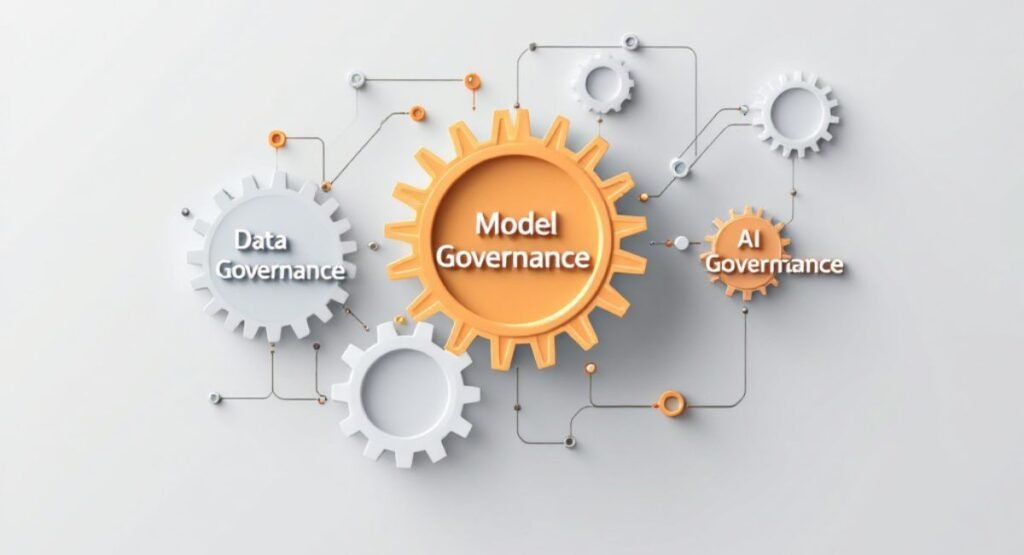
Decentralized Governance Models
Some organizations prefer decentralized governance approaches. These models give business units greater control over AI initiatives while maintaining broad organizational standards. This approach can improve agility and speed decision-making.
However, decentralized governance requires strong communication and accountability mechanisms. Without proper coordination, organizations may struggle to maintain consistency and compliance.
AI Risk Management Frameworks
Risk-focused governance models emphasize identifying, assessing, and mitigating AI-related threats. These frameworks prioritize business impact and operational resilience rather than procedural compliance alone.
Organizations often use dedicated AI risk management methodologies to strengthen governance programs and improve risk visibility across AI initiatives.
NIST AI RMF as an Alternative Approach
The NIST AI RMF provides a flexible governance structure that organizations can adapt to their specific needs. Its focus on governance, measurement, management, and risk assessment makes it suitable for a wide range of industries.
Many businesses adopt NIST principles because they support practical governance implementation without excessive complexity. The framework also aligns well with broader risk management initiatives.
ISO 42001 AI Management Systems
ISO 42001 certification is becoming increasingly important for organizations seeking independent validation of governance practices. The standard provides a structured approach to AI management and continuous improvement.
Certification can strengthen stakeholder confidence and demonstrate commitment to responsible AI deployment. It also supports broader compliance and governance objectives.
Hybrid Governance Models for Large Organizations
Many enterprises combine multiple governance approaches to address diverse business requirements. Hybrid models blend centralized oversight with local flexibility, creating a balanced governance structure.
This approach allows organizations to maintain consistency while supporting innovation and operational agility across departments and regions.
How to Build a Future-Proof Enterprise AI Governance Framework
Preparing for Agentic and Autonomous AI
The future of AI includes increasingly autonomous systems capable of making decisions and performing tasks with limited human involvement. Organizations must prepare governance frameworks that address these new capabilities.
Strong Agentic AI governance, AI governance for autonomous agents, and AI oversight framework practices help maintain control while enabling innovation. These capabilities will become increasingly important as autonomous technologies mature.
Implementing Continuous Compliance Monitoring
Compliance can no longer rely on periodic reviews alone. Organizations need continuous visibility into AI activities, risks, and performance. Continuous monitoring helps identify issues early and supports proactive governance.
Advanced AI compliance automation, Continuous compliance monitoring, and AI compliance tools provide real-time insights that improve governance effectiveness and reduce operational risk.
Building Governance Automation Workflows
Manual governance processes often struggle to scale. Automation improves efficiency by reducing repetitive tasks and ensuring consistent policy enforcement. Organizations increasingly adopt Governance automation and Approval workflow automation to support growth.
Automated workflows also improve transparency and accountability. They help organizations maintain compliance without creating unnecessary administrative burdens.
Creating Audit-Ready AI Systems
Audit readiness requires comprehensive documentation, monitoring, and reporting capabilities. Organizations should establish processes that capture governance activities automatically throughout the AI lifecycle.
Features such as AI audit logs, AI audit trail, AI documentation tools, and AI model registry support audit preparation while improving operational visibility and compliance management.
AI Governance KPIs and Success Metrics
Governance effectiveness should be measured using meaningful performance indicators. Metrics may include compliance rates, audit findings, approval times, incident frequency, and model performance.
Regular measurement supports continuous improvement and helps leaders demonstrate the value of governance investments. It also provides insights that guide future decision-making.
Future Trends Shaping Enterprise AI Governance
The governance landscape continues to evolve rapidly. Emerging trends include Next-generation AI governance, stronger AI trust and safety controls, advanced explainability capabilities, and increased regulatory oversight.
Organizations that stay ahead of these trends often achieve stronger operational resilience and competitive advantages. Proactive governance prepares businesses for future challenges and opportunities.
Final Thoughts: Creating Responsible, Scalable, and Business-Driven AI Transformation
Key Lessons for Enterprise Leaders
AI transformation succeeds when governance and innovation work together. Organizations that establish clear accountability, strong monitoring, and effective compliance processes create a foundation for long-term success. A mature AI governance maturity model supports sustainable growth while reducing operational and regulatory risks.
Leaders should focus on governance from the beginning rather than treating it as a later-stage requirement. Early investment in governance often accelerates deployment and improves outcomes across the organization.
Governance as a Competitive Advantage
Governance is no longer just about compliance. It has become a strategic advantage. Organizations that build trust, transparency, and accountability into AI systems often outperform competitors that prioritize speed alone.
Strong Responsible AI adoption, effective AI governance standards, and comprehensive governance programs create confidence among customers, investors, employees, and regulators. This trust becomes increasingly valuable as AI adoption expands.
Action Steps to Start Today
Organizations should begin by creating an inventory of AI systems, assessing governance maturity, identifying high-risk use cases, and establishing ownership structures. These foundational activities support future governance efforts and improve visibility across AI initiatives.
Leaders should also evaluate available Best AI governance tools, compare Top AI governance solutions, review AI governance software review resources, and explore AI governance platform comparison studies before selecting technology partners.
The Future of Enterprise AI Transformation and Governance Frameworks
The future belongs to organizations that balance innovation with responsibility. As AI becomes more powerful, governance will play an increasingly important role in maintaining trust, security, and compliance. Businesses that invest in strong governance today will be better prepared for tomorrow’s challenges.
Whether evaluating Best enterprise AI platforms, conducting an Enterprise AI platform review, exploring AI governance vendors, requesting an AI governance software demo, comparing AI governance tool alternatives, reviewing AI compliance software comparison studies, evaluating Free vs paid AI governance tools, assessing Buy AI governance platform options, or researching AI governance for machine learning models, AI governance for generative AI, AI governance for customer service, AI governance for business intelligence, AI governance for analytics teams, and AI governance for data teams, organizations that embrace governance as a strategic capability will lead the next wave of AI-driven innovation.
“The organizations that win with AI will not be the ones that deploy it fastest. They will be the ones that deploy it most responsibly, transparently, and effectively.”
Enterprise AI Governance Framework Quick Reference Table
| Governance Area | Primary Goal | Key Technologies |
| AI model governance | Model oversight | AI model registry, AI monitoring tools |
| AI security governance | Protect systems and data | AI security platform, AI security controls |
| AI compliance framework | Meet regulations | AI compliance tools, AI compliance automation |
| AI lifecycle management | Manage models end-to-end | AI observability tools, AI monitoring platform |
| AI risk management | Reduce operational risks | AI risk management software, AI risk scoring |
| AI policy management | Standardize governance | Policy-as-code, Governance dashboards |
| AI transparency | Improve trust | Explainability tools, AI transparency reporting |
| AI automation governance | Scale oversight | Governance automation, Approval workflow automation |
The journey toward successful Enterprise AI transformation starts with governance. When organizations combine innovation, accountability, compliance, and transparency, they create AI systems that are not only powerful but also trustworthy, scalable, and future-ready.
FAQs
1: Why do we need an Enterprise AI governance framework?
Because AI without control can create risks like bias, data leaks, and wrong decisions. A strong framework keeps your AI safe, fair, and aligned with business goals.
2: What is the biggest challenge in AI transformation?
The biggest challenge is balancing speed with safety. Companies want fast AI adoption, but they also need proper monitoring, rules, and accountability.
3: How does AI governance improve business performance?
It improves trust, reduces errors, and ensures AI systems work correctly. This leads to better decisions, smoother workflows, and higher efficiency.
4: What tools are used in AI governance?
Businesses use AI monitoring tools, compliance platforms, and risk management software to track models, detect issues, and ensure proper usage.
5: Is AI governance only for large companies?
No, even small and mid-sized businesses need it. Any company using AI should follow basic governance to avoid risks and stay compliant.

Welcome to Corexity! I’m Zain Bhatti, an AI-Powered SEO Strategist with 3 years of experience. I help you master the latest AI tools and rank higher with simplified, high-impact content strategies. Let’s grow together!